
Everyday electronics, wind turbines, and EVs require critical minerals, yet the U.S. relies on other countries for its critical minerals supply chain. We rely heavily on China, and Japan is second on that list, supplying us with two minerals. Brazil, Gabon, Germany, Mexico, and South Korea each supply one mineral.
While these critical minerals are in our ground, permits for the required mines can take up to 16 years to secure. Once permits are in place, construction, training, and troubleshooting still take time before a mine is up and running effectively. Instead of mining these minerals from the ground, tech-driven urban mining is gaining ground.
What Is Tech-Driven Urban Mining?
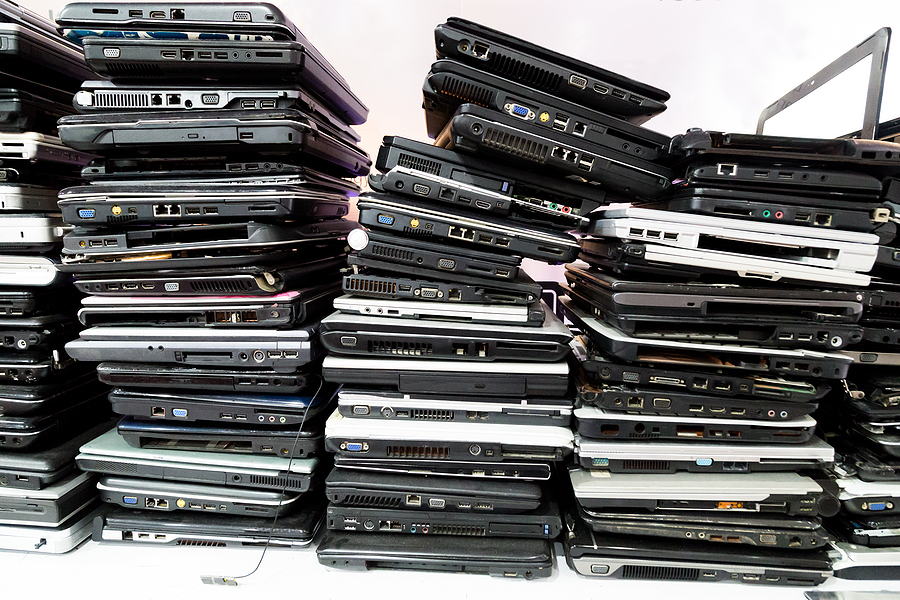
Tech-driven urban mining uses advanced technology to locate, sort, and recover critical minerals from construction debris, broken or old electronics, and old EVs. The electronic components, batteries, and materials that consumers and businesses would otherwise throw out become an “urban” mine for essential materials.
One study found that almost 7 million unused cellphones contained approximately $10 million in gold. Construction waste often contains aluminum, copper, and steel. E-waste and EV batteries are a good source of lithium. Cobalt and silver are other valuable materials that can be recovered from old electronics.
Why Is Urban Mining Becoming So Popular?
Urban mining is popular because it provides three main benefits to everyone in the country. Most people have a smartphone. It’s quite possible you also have a laptop, tablet, and other electronic smart devices like security cameras, smart TVs or streaming boxes, gaming systems, and HVAC devices.
We’ve seen chip and graphics card prices soar because supplies were limited. What happens if other countries decided to block the U.S. from any critical minerals completely? Could you live without the devices you’ve come to rely on?
Urban mining is popular because it benefits both the environment and the affordability of the electronics we rely on.
- Environmental Impact and Greenhouse Gas Emissions: Processes used to extract the critical minerals and metals from e-waste are less harmful than traditional mining.
- High Purity: Electronics materials are already processed, so the concentration of materials collected in urban mining is higher. Instead of blasting, hauling, and crushing stone to extract materials like gold or copper ore, urban mining recovers materials that are already processed and ready to recover.
- Supply Chain Security: Using materials collected through urban mining reduces the nation’s dependence on foreign countries for the minerals needed for clean energy, EVs, and environmentally friendly tech.
Key Technologies That Shape Urban Mining
While we’ve always relied on traditional mining with workers drilling holes, blasting rock, and traveling into tunnels to collect and cart out more material to process, urban mining relies heavily on technology.
It’s the technology that reduces heavy lifting and labor-intensive work while recovering secondary raw materials at high purity. Technology is key to turning e-waste piles into the materials that become part of a circular economy.
Artificial Intelligence and Machine Learning
Before anything else, e-waste must be analyzed.
- Material Identification: AI analyzes component assemblies and printed circuit boards to identify high-value components. Once these items are identified, disassembly begins.
- Contaminant Removal: If any hazardous items weren’t removed at an e-waste facility, AI recognizes and removes them to minimize issues. Damaged lithium-ion batteries are one of the biggest problems due to the risk of fire.
- Predictive Yield Modeling: As the analytics continue, AI can determine the yield of reusable critical minerals and metals from each batch.
Automated Sorting and IoT
AI identifies what’s valuable and how much there is; automated equipment then sorts those materials with AI vision and robotics.
- High-Speed Robotic Sorting: Robotics sort materials far faster than human workers, so what might take hours is completed in minutes. Accuracy rates also improve.
- IoT-Enabled Logistics: If a facility uses smart recycling bins, it can monitor weight and fill capacity to optimize routes, reducing transportation and fuel costs.
Advanced Chemical Processes
Items have to be processed once they’re sorted. Extracting materials like cobalt, lithium, neodymium, and nickel requires special handling. Two processes are commonly used:
- Bio-Leaching: Microbes break down the waste and separate the metals.
- Hydrometallurgical Refining: Chemical solutions leach out the metals for the highest possible purity.
Blockchain Transparency
As environmental regulations increase, companies need to prove compliance. Blockchain technology helps with this by providing:
- Chain of Custody: Tracking from collection to final processing ensures nothing is lost or stolen.
- Digital Passport: Shows the origin, carbon footprint impact during processing, and sourcing for recycled content.
- Supply Chain Compliance: Proves the quantity of recycled materials used and that they came from an ethical source.
Remote Operations Centers
While a facility processes e-waste to recover as many critical minerals as possible, remote operations provide several benefits.
- Centralized Plant Management: Operators can monitor and control equipment from a centralized location instead of traveling to different sites.
- Hazard Management: Workers avoid more dangerous work zones, such as a chemical extraction room, which helps prevent workplace injuries and workers’ comp claims.
- Predictive Maintenance: Continual assessment of the chemical values, conveyors, robotic arms, shredders, and other equipment takes place. If something starts to change, maintenance happens before equipment has to be shut down for days or weeks for repairs.
Are There Challenges to Urban Mining?
Yes, there are hurdles, but they’re not impossible to resolve. Every urban mining specialist must consider three main hurdles.
Product Design
E-waste often has intricate designs, such as components that are glued in place. When glue is involved, it’s much harder to disassemble without causing damage. It takes longer, which drives up costs.
Data Privacy
Another challenge is data privacy. Consumers and businesses have personally identifiable information (PII) and sensitive personally identifiable information (SPII) on devices. Before a device is disassembled, this information needs to be carefully deleted.
Data destruction also takes time. Plus, a government agency’s electronics have different security levels than a high school teen’s. This has to be carefully considered.
Infrastructure
Finally, urban mining infrastructure requires money. Facilities must be constructed. The equipment has to be designed, built, installed, and tested before it’s operational. Permitting costs and processes also come before a plant is even constructed.
Area residents may not like the idea of any emissions, water consumption, or power consumption impacting their neighborhood. Planning must include on-site industrial wastewater treatment facilities, solar- or wind-powered energy sources, and closed-loop filtration systems to recycle the water the plant uses.
Plus, the facility needs adequate roadways for trucks to bring items to and from it. In more remote areas, developing or improving existing roads takes time and money, too.
Looking to the Future
Traditional mining won’t be fast enough or environmentally friendly enough to meet today’s demand for critical minerals. Urban mining is the best solution, but it will still require investment and multiple facilities to process the estimated 7.9 million tons of e-waste generated in the U.S. each year.
Keeping that waste from landfills is both essential and practical. Every device contains materials that can be reused. The nation benefits from reusing materials in everyday items. The earth benefits because traditional mining isn’t polluting the soil and water that many people rely on. It starts with every consumer and business owner recycling electronics properly.