Industrial electric motor components
Explore the animated assembly ↗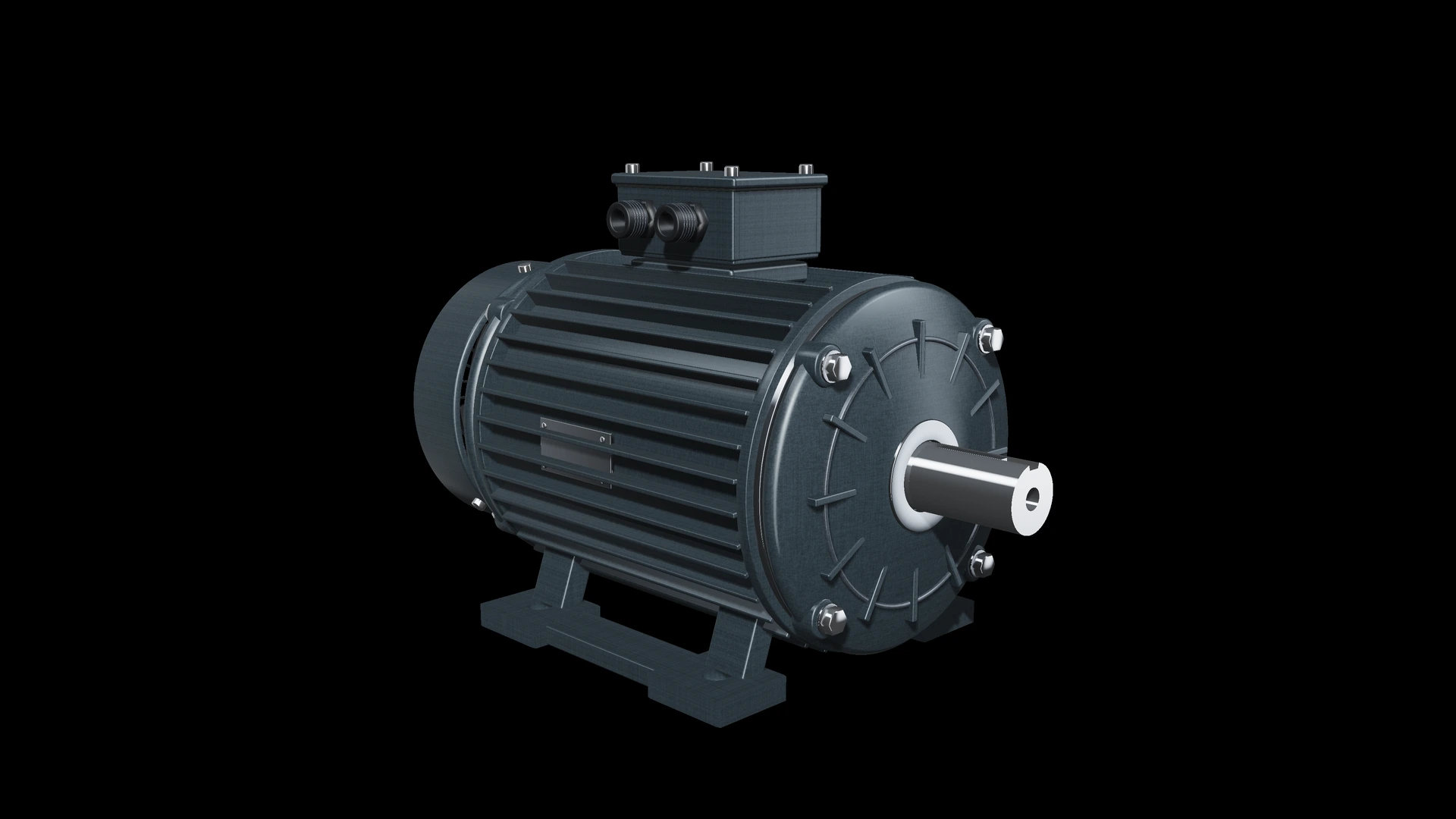
Permanent-magnet industrial motors combine rotor magnets, copper stator windings, steel laminations and bearings. The interaction between the stator’s magnetic field and the rotor magnets produces rotation.
Motor technology determines its material content. In NdFeB designs, neodymium is part of a magnet alloy with iron and boron. Separating magnets, copper and steel is a key step in material recovery.
Magnets that help turn the rotor
In a permanent-magnet motor, the rotor’s magnets interact with the stator’s magnetic field to create rotation.
NdFeB magnets, copper windings and steel parts are distinct material streams. Identifying and separating them is the starting point for recovery.
